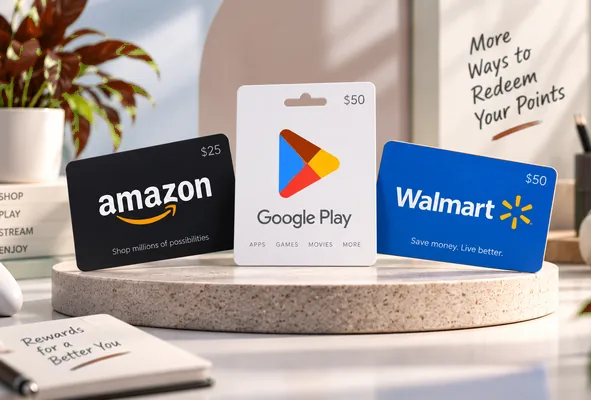
User acquisition for mobile apps is the process of attracting and converting new users to download and install your app through paid channels, organic strategies, and performance-based partnerships. In 2026, US app publishers and performance marketers are increasingly relying on multi-channel acquisition funnels—combining offerwall monetization, CPA networks, affiliate marketing, and in-app rewards—to scale quality users cost-effectively while maximizing lifetime value (LTV).
Key Takeaways
- Multi-channel is mandatory: Top-performing US publishers now blend offerwalls, CPA campaigns, influencer partnerships, and organic ASO to acquire users at scale without overspending on paid ads.
- Offerwall monetization drives ROI: Rewarded engagement platforms like QuestX let users earn cashback, gift cards, and deals while publishers acquire high-intent users at predictable cost-per-install (CPI) rates.
- Quality over volume: data.ai reports that US app publishers prioritize LTV-positive cohorts, not raw download counts, making performance marketing and affiliate partnerships essential.
- CPA networks remain cost-effective: Affiliate and CPA models reduce upfront ad spend risk; publishers pay only for conversions (installs, sign-ups, or in-app actions).
- Compliance and data privacy reshape strategy: iOS privacy changes and state-level regulations (CCPA, GDPR-inspired) require first-party data collection and transparent user consent frameworks.
---
What Is User Acquisition for Mobile Apps?
Mobile app user acquisition (UA) encompasses all tactics and channels used to drive app downloads, installations, and active user onboarding. Unlike web user acquisition, mobile UA must account for app store algorithms (iOS App Store, Google Play), device-level privacy settings, and the multi-step funnel from ad impression to app open and first in-app action.
In 2026, eMarketer data shows that US brands and publishers deploy UA across five primary channels:
- Paid social and programmatic ads (Meta, Google, TikTok, Snapchat)
- Affiliate and CPA networks (performance-based partnerships)
- Offerwall and rewards platforms (incentivized installs)
- Organic and ASO (app store optimization, viral growth)
- Influencer and partnership marketing (creator collaborations)
---
The Role of Offerwall Monetization in User Acquisition
Offerwalls have evolved from simple incentive mechanisms to sophisticated user acquisition engines. An offerwall is a branded interface where users complete tasks—install apps, sign up for services, watch videos, or earn Move/Play/Share rewards—in exchange for in-app currency, cashback, or gift cards.
Why offerwalls work for 2026 UA:
- High-intent users: Users who interact with offerwalls are self-selecting for engagement; they're already motivated to earn or save money.
- Predictable CPI: Publishers pay per install or per action, not per impression, reducing wasted ad spend.
- Dual monetization: Publishers acquire users *and* monetize existing users simultaneously through rewards distribution.
- First-party data: Offerwall interactions generate rich behavioral data without reliance on third-party cookies or IDFA.
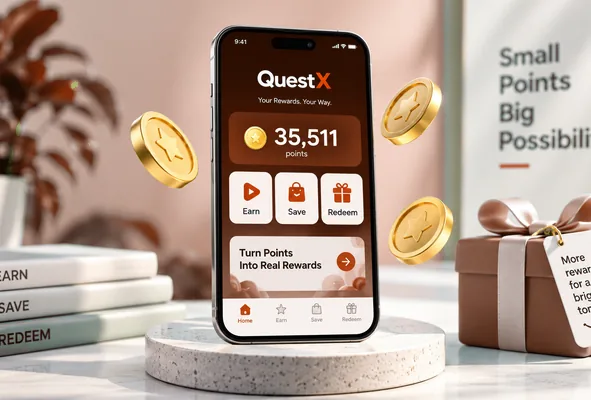
QuestX example: QuestX's offerwall and rewards layer lets US app publishers tap into a pre-qualified user base of earners and deal-seekers. Publishers integrate the QuestX SDK, list their app in the offerwall, and pay only for qualified installs or sign-ups—no impression waste.
---
CPA Campaigns and Affiliate Marketing for App Growth
Cost-per-action (CPA) and affiliate marketing remain the backbone of performance-driven user acquisition. In 2026, Adjust's mobile UA report confirms that CPA-based campaigns deliver the lowest customer acquisition cost (CAC) for US app publishers, especially in gaming, finance, and utility verticals.
How CPA campaigns work:
- Define your conversion: Install, sign-up, first purchase, or level completion.
- Set your payout: Typically $0.50–$5.00 per install (varies by vertical and user quality).
- Recruit affiliates or networks: Partner with affiliate networks, influencers, or content publishers.
- Track and optimize: Use mobile measurement partners (MMPs) to track attribution, cohort quality, and LTV.
- Scale winners: Reinvest in top-performing affiliates and channels.
Top CPA verticals in the US (2026):
- Gaming: $1.50–$3.50 CPI (higher for mid-core and console ports)
- Finance & Fintech: $2.00–$4.00 CPI (regulatory compliance required)
- Utility & Productivity: $0.75–$2.00 CPI (lower friction)
- Health & Fitness: $1.25–$3.00 CPI (growing segment)
---
Building a Multi-Channel UA Strategy for 2026
Top-performing US publishers don't rely on a single channel. Instead, they orchestrate a balanced portfolio:
Channel allocation framework:
- 40% Paid Social & Programmatic: Meta, Google UAC, TikTok (brand awareness, scale)
- 25% Affiliate & CPA Networks: Performance-based partnerships (cost control, ROI focus)
- 20% Offerwall & Rewards Platforms: QuestX, branded incentive programs (high-intent, first-party data)
- 10% Organic & ASO: App store optimization, viral mechanics (sustainable, low CAC)
- 5% Influencer & Partnerships: Creator collaborations, co-marketing (brand lift, niche audiences)
Implementation steps:
- Segment your target user: Define LTV tiers (high-value whales, mid-tier engaged, casual users).
- Allocate budget by LTV: Spend more to acquire users likely to match your highest-LTV cohorts.
- Set cohort benchmarks: Track day-1, day-7, and day-30 retention; in-app spend; and LTV by channel.
- Optimize in real-time: Shift budget from underperforming channels to winners weekly.
- Layer retention campaigns: Use push notifications, in-app messaging, and rewards to maximize LTV after acquisition.
---
Privacy, Compliance, and First-Party Data in 2026 UA
The post-IDFA, post-third-party-cookie era demands a privacy-first approach to user acquisition. Statista's 2026 forecast highlights that US publishers must invest in first-party data collection and transparent consent frameworks.
Privacy-compliant UA best practices:
- Implement SKAdNetwork 4.0: Apple's privacy-preserving attribution framework; plan for limited conversion windows.
- Build first-party audiences: Collect emails, phone numbers, and behavioral signals directly via sign-ups and offerwall interactions.
- Transparent consent: Disclose data use in privacy policies and in-app consent flows; honor user opt-out preferences.
- Contextual targeting: Replace behavioral targeting with contextual ads (content-based, time-based, device-type).
- Cohort analysis over individual tracking: Use aggregate cohort data to inform UA decisions rather than individual user profiles.
QuestX compliance advantage: QuestX's rewards platform operates on first-party user consent and transparent value exchange—users *choose* to engage with offers in exchange for rewards, generating clean, compliant data for both publishers and advertisers.
---
Measuring UA Success: KPIs and Benchmarks for 2026
Track these metrics to evaluate your mobile app user acquisition performance:
| Metric | 2026 US Benchmark | Target | |--------|-------------------|--------| | Cost Per Install (CPI) | $0.50–$3.00 (vertical-dependent) | Below your LTV threshold | | Day-1 Retention (D1) | 25–40% (gaming: 20–30%, utility: 40–50%) | >30% | | Day-7 Retention (D7) | 10–20% (gaming: 8–15%, utility: 20–35%) | >15% | | Day-30 Retention (D30) | 5–10% (gaming: 3–8%, utility: 10–20%) | >8% | | Lifetime Value (LTV) | $2–$15 (varies by monetization model) | LTV:CAC ratio >3:1 | | Install-to-First-Action | 40–60% (varies by friction) | >50% | | Payback Period | 30–90 days (depends on monetization) | <60 days |
---
Frequently Asked Questions
Q: What's the difference between CPA and CPI in mobile app user acquisition?
A: CPI (Cost Per Install) is a specific type of CPA focused solely on app downloads. CPA is broader—you can pay for installs, sign-ups, first purchases, or any defined action. In 2026, most affiliate networks use CPI and CPA interchangeably for app UA, but CPA can also apply to in-app actions like "first deposit" or "level 5 completion" in gaming.
Q: How do offerwalls like QuestX improve user acquisition ROI compared to traditional paid ads?
A: Offerwalls reduce wasted impression spend by targeting only high-intent users who opt-in to earn rewards. You pay only for qualified installs or sign-ups, not impressions. Additionally, offerwall users often show higher D1 and D7 retention because they're already motivated by incentives. data.ai benchmarks show offerwall-acquired cohorts achieve 3–5x better LTV:CAC ratios than cold traffic from programmatic ads.
Q: How should I allocate budget between paid ads, affiliate networks, and offerwall platforms?
A: Start with a 40-25-20 split: 40% to paid social/programmatic for scale, 25% to affiliate/CPA for cost control, and 20% to offerwalls for high-intent users. Monitor cohort quality weekly and shift budget toward channels delivering users above your LTV threshold. By Q2 2026, most successful US publishers adjust to 35-30-25 as they optimize toward profitability.
---
Conclusion: Scale Your App with QuestX in 2026
User acquisition for mobile apps in 2026 demands a data-driven, privacy-first, multi-channel approach. Offerwalls, CPA networks, and rewards platforms are no longer optional—they're essential to compete for quality users at sustainable CAC.
Ready to accelerate your mobile app user acquisition?
- Brands & Publishers: Book a QuestX partners demo to integrate our offerwall and rewards layer. Scale high-intent users with predictable CPI pricing. Visit quest-x.ai/partners—choose Starter ($499/mo) or Growth ($2,000/mo) via Stripe checkout.
- Earners & Side-Hustlers: Download the QuestX app to earn cashback, gift cards, and deals by completing offers, moving, playing, and sharing. Available on iOS and Android.
---
 Nov 28, 2026
